

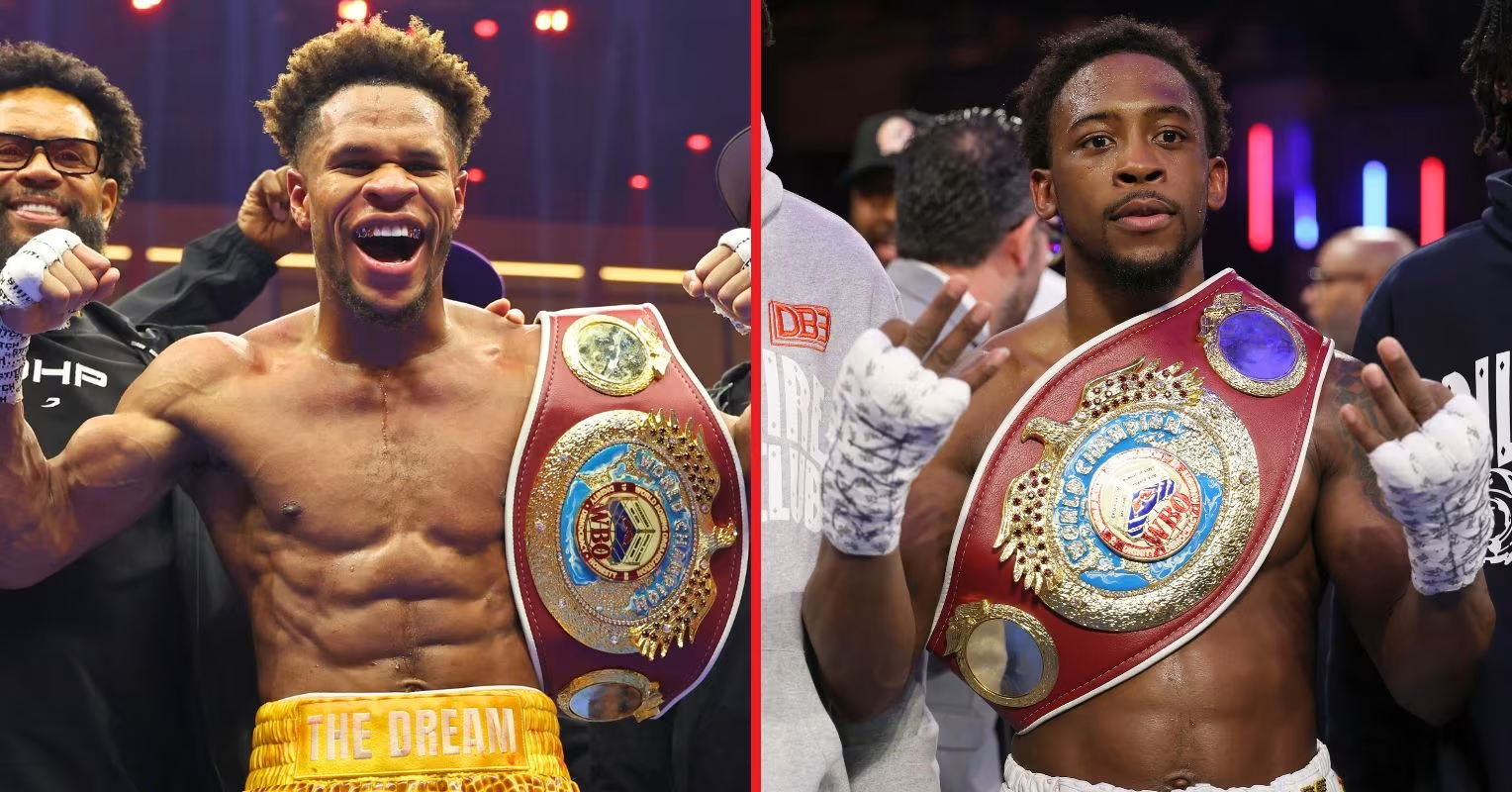
Keyshawn Davis has dramatically withdrawn from his ordered WBO welterweight championship fight against Devin Haney, bringing the highly anticipated all-American showdown to an unexpected halt.
The World Boxing Organization confirmed that Davis, Haney’s mandatory challenger, formally rejected the financial terms established following the official purse-bid process. The unbeaten contender was scheduled to receive 25 percent of the total purse, while Haney would collect the remaining 75 percent as the reigning champion.
Top Rank secured the promotional rights after submitting a massive winning bid of $8.55 million. Under the ordered split, Haney’s share would have been approximately $6.41 million, with Davis receiving about $2.14 million. However, Davis’s representatives notified the WBO that he would not accept the challenger’s percentage or participate under those terms.
The fight had reportedly been targeted for October 3, with New York, Las Vegas and Atlanta discussed as possible host cities. The contest was expected to provide Davis with an immediate opportunity to become a two-division world champion while giving Haney a dangerous first mandatory challenger at welterweight.
Davis previously called publicly for the Haney fight, describing it as a major attraction that boxing fans would support. His sudden withdrawal has therefore sparked heated reactions, with some observers questioning why he walked away after campaigning for the opportunity.
The 2021 Olympic silver medalist holds an unbeaten professional record of 15 victories, including 10 knockouts. He formerly held the WBO lightweight championship and most recently defeated Nahir Albright by unanimous decision. Haney, also unbeaten, captured the WBO welterweight crown by defeating Brian Norman Jr.
Attention now turns to the WBO’s Championship and Ratings Committees, which will decide what happens next. The organization could select another mandatory challenger, potentially opening the door for a different opponent to pursue Haney’s title.
What appeared destined to become one of American boxing’s biggest fights has collapsed before contracts were finalized—and the dispute over millions may leave both fighters searching for new opponents.
