

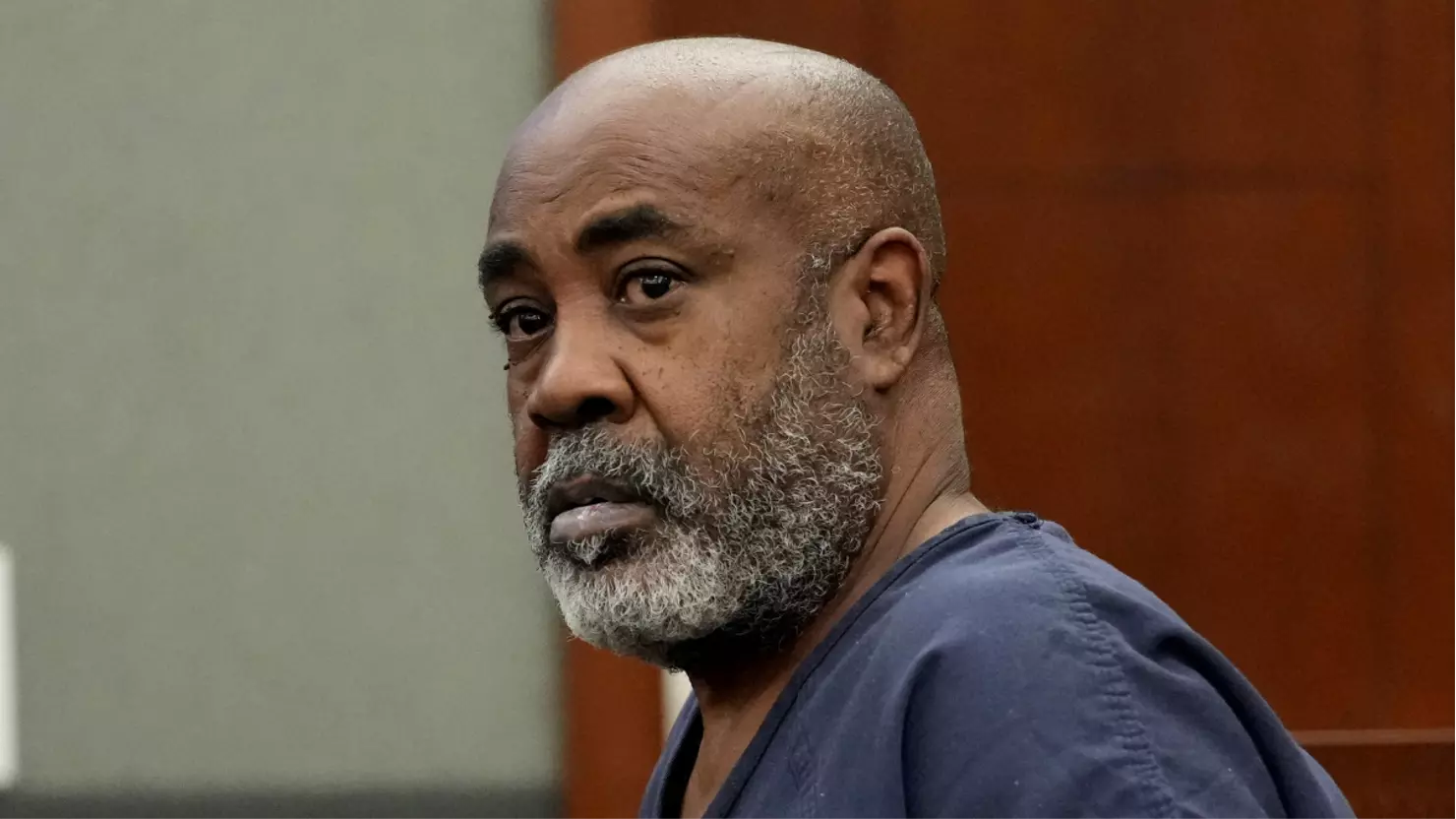
Duane “Keefe D” Davis, the former gang leader convicted of orchestrating the 1996 murder of legendary American rapper Tupac Shakur, has reacted defiantly after receiving a sentence of 40 years to life in prison.
The 63-year-old was sentenced on Tuesday, October 13, 2026, by Judge Carli Kierny at the Clark County District Court in Las Vegas, nearly three decades after the shocking murder that rocked the global hip-hop community.
Despite the lengthy sentence, Davis maintained his innocence and made it clear that he would challenge the court’s decision.
“I’m going to appeal this case for sure,” Davis declared following the sentencing.
Judge Delivers Crushing Sentence
Davis was found guilty of first-degree murder in August 2026 after prosecutors successfully argued that he helped organize the deadly drive-by shooting of Tupac.
The court imposed consecutive sentences of 20 years to life for murder and the use of a firearm, bringing his total sentence to 40 years to life.
BREAKING: Duane “Keefe D” Davis reacts after being sentenced to 40 years to life in prison for his role in the 1996 murder of Tupac Shakur. https://t.co/Il9yEdwAo6
— Breaking911 (@Breaking911) October 13, 2026
During sentencing, Judge Kierny condemned Davis’s involvement in the killing, emphasizing the devastating consequences of taking another person’s life.
Prosecutors maintained that Davis supplied the firearm used in the attack, although he was not accused of personally pulling the trigger.
How Tupac Shakur Was Murdered
Tupac was shot on September 7, 1996, while riding in a BMW driven by Death Row Records executive Marion “Suge” Knight near the Las Vegas Strip.
The 25-year-old rapper died six days later from his injuries.
Investigators linked the shooting to a violent confrontation involving Davis’s nephew, Orlando Anderson, and members of Tupac’s entourage at the MGM Grand casino earlier that evening.
Prosecutors argued that Davis helped arrange the retaliatory attack.
Tupac’s Family Reacts Emotionally
The sentencing brought emotional moments as members of Tupac’s family addressed the court.
His sister, Sekyiwa Shakur, described the devastating impact her brother’s murder had on their family, while other relatives reflected on the future he never experienced.
Davis’s defense team argued that his previous public accounts of the shooting were exaggerated and did not establish his guilt.
His lawyers have indicated their intention to appeal the conviction.
Thirty years after Tupac’s death, the landmark sentence represents a major moment in hip-hop history, but Davis’s planned appeal means the legal battle may not be over.
