

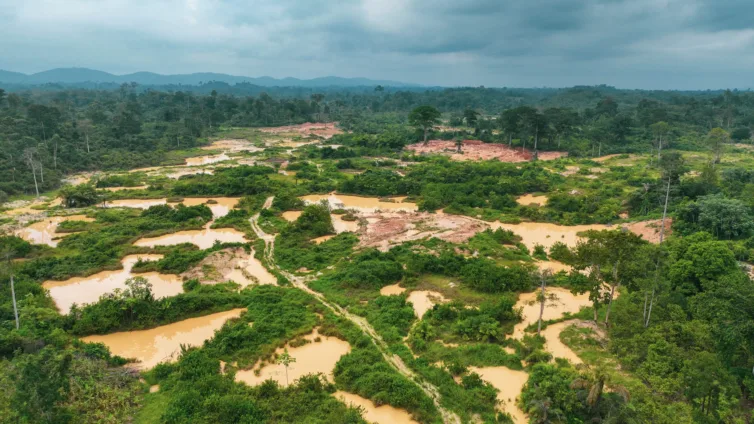
President John Dramani Mahama has raised serious concerns over the destruction of Ghana’s forest reserves by illegal mining activities, popularly known as galamsey, revealing that 44 out of the country’s 288 forest reserves have suffered varying degrees of environmental damage.
The alarming disclosure highlights the growing threat illegal mining poses to Ghana’s natural resources, biodiversity and water bodies, despite successive government efforts to bring the menace under control.
Speaking during his presidential media encounter in September 2025, Mahama acknowledged the devastating impact of illegal mining, explaining that some forest reserves had become dangerous territories controlled by heavily armed miners.
According to the President, nine of the affected reserves had previously become no-go areas, making it extremely difficult for forestry officials and security personnel to operate safely.
However, Mahama maintained that his administration was making significant progress in reclaiming forests from illegal miners.
He disclosed that security operations had successfully recovered all nine heavily affected forest reserves, while hundreds of excavators, water pumps and other mining equipment had been confiscated.
The President also reiterated his government’s determination to prevent further destruction of the country’s forests and rivers through intensified enforcement operations and environmental restoration initiatives.
In October 2026, Mahama further announced that soldiers would remain stationed in the nine reclaimed forest reserves to prevent illegal miners from returning after security operations.
The government has also introduced reforestation measures, including its Tree for Life initiative, aimed at restoring lands destroyed by illegal mining.
Despite these interventions, environmental destruction remains a major national concern, with experts warning that unchecked mining activities could threaten access to clean drinking water, agricultural production and the survival of important ecosystems.
For many Ghanaians, the growing destruction of forest reserves raises questions about the effectiveness of environmental laws, accountability and the prosecution of individuals financing illegal mining operations.
Mahama has repeatedly appealed to traditional authorities, local communities and other stakeholders to support the government’s campaign against galamsey.
As Ghana continues battling illegal mining, the challenge remains whether sustained enforcement, tougher prosecutions and land restoration can reverse years of environmental destruction and protect the country’s remaining forests for future generations.