
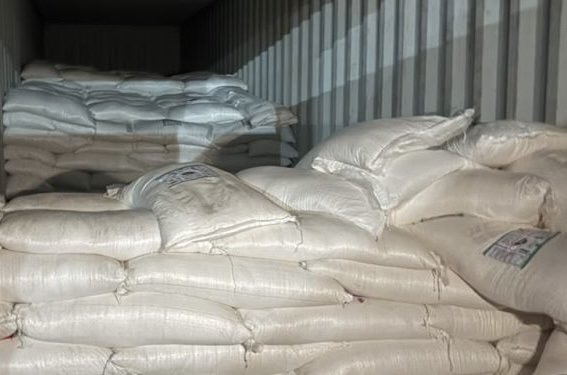
Ghana’s fight against international drug trafficking has taken another dramatic turn following the reported interception of 2.75 tonnes of cocaine, valued at an estimated $412.5 million, at the Tema Port.
The operation, reportedly conducted jointly by the Narcotics Control Commission (NACOC) and national intelligence officials, represents a significant development in the country’s efforts to combat transnational drug trafficking.
In a statement issued on Sunday, November 29, 2026, NACOC confirmed that the seizure occurred on Saturday night following a week-long surveillance operation.
Five foreign nationals have been arrested in connection with the massive cocaine consignment, while investigations are underway to identify and apprehend their suspected local accomplices.
The Commission reaffirmed its determination to dismantle international drug trafficking networks operating within Ghana, warning that individuals involved in the illicit trade would face prosecution regardless of their nationality, financial status or political connections.
Growing Concerns Over Cocaine Trafficking Through Ghanaian Ports
The latest seizure comes amid mounting concerns over the exploitation of Ghana’s maritime trade routes by international drug trafficking syndicates.
In September 2026, French customs authorities intercepted approximately 3.9 tonnes of cocaine in a shipment originating from Ghana at the Port of Dunkirk.
Earlier this month, Spanish authorities also announced the interception of 2.6 tonnes of cocaine linked to a consignment exported from Ghana.
These successive discoveries have raised serious questions about the effectiveness of security and inspection mechanisms at Ghanaian ports, as well as the potential involvement of organized criminal networks.
Following the interception in France, President John Dramani Mahama directed an inter-agency review of Ghana’s narcotics detection systems at ports and borders.
NACOC Vows to Intensify Crackdown
NACOC has announced plans to strengthen its intelligence-gathering capabilities, forensic investigations and drug detection operations across the country’s seaports, airports and land borders.
The Commission also emphasized its commitment to protecting Ghana’s international reputation and preventing the country from becoming a major transit hub for illicit drugs.
While the latest interception represents a significant victory for Ghana’s security agencies, it also underscores the urgent need for sustained surveillance, stronger institutional accountability and international cooperation.
Attention now turns to the ongoing investigations and whether authorities can uncover the broader criminal network behind the multimillion-dollar cocaine consignment.