
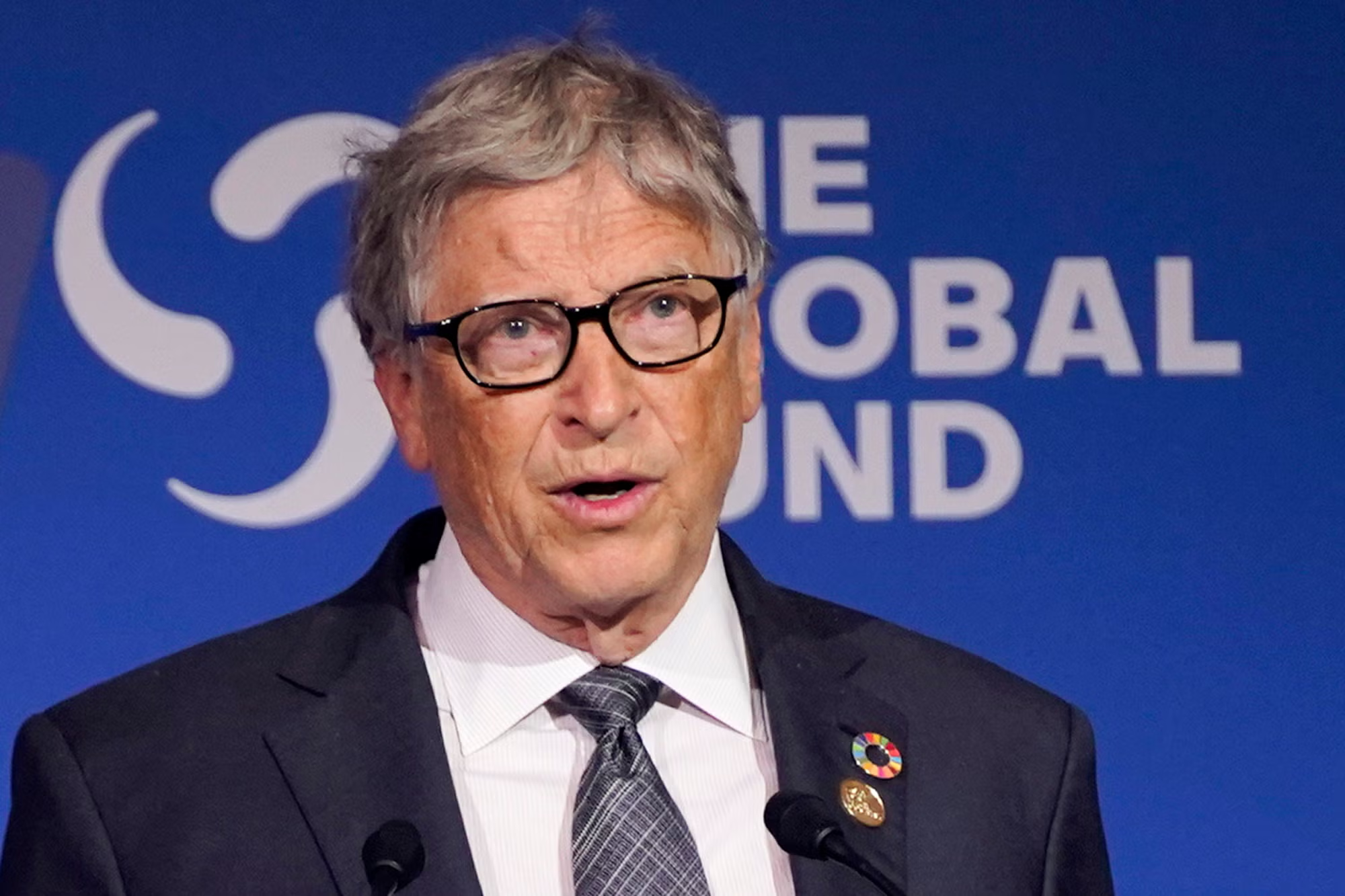
Microsoft co-founder Bill Gates has opened up about the growing impact of artificial intelligence on the job market, warning that AI could reshape employment faster and more dramatically than previous technological revolutions.
In a new essay published on August 26, Gates said AI is advancing at an extraordinary pace and could eventually perform work currently handled by people across numerous industries. Unlike earlier innovations that took generations to transform the workforce, he believes AI-driven disruption could unfold within roughly a decade.
According to Gates, jobs in customer service, law, medicine, software development, sales and manufacturing could all be affected. Entry-level and mid-level positions may face particularly significant pressure as AI becomes more reliable and capable of completing complex tasks with less human supervision.
Gates also warned that blue-collar workers are not immune. As intelligent robots become cheaper and more advanced, he expects automation to increasingly compete with humans in physical jobs, including areas such as hospitality and construction.
But the billionaire technology pioneer does not believe machines should be allowed to replace humans everywhere.
Gates has introduced the idea of “Human Reserved” jobs—roles society could intentionally protect for people even when AI becomes capable of performing them. He pointed to areas involving caregiving and human relationships as examples where compassion, trust and personal connection may remain too important to surrender completely to machines.
He has also renewed his proposal for governments to consider taxing robots and AI usage, arguing that existing tax systems can make automation financially attractive to companies. Revenue raised from such measures could potentially support retraining programs and safety nets for displaced workers.
Despite his concerns, Gates remains optimistic about AI’s potential to transform healthcare, education and scientific research. However, he warned that governments and businesses must begin preparing now rather than waiting until widespread job losses occur.
For Gates, the question is no longer whether AI will transform employment, it is whether society will be prepared when that transformation accelerates.