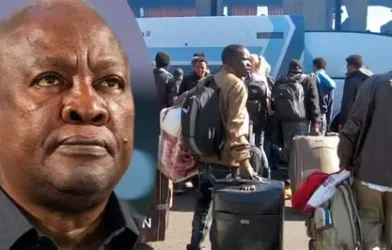

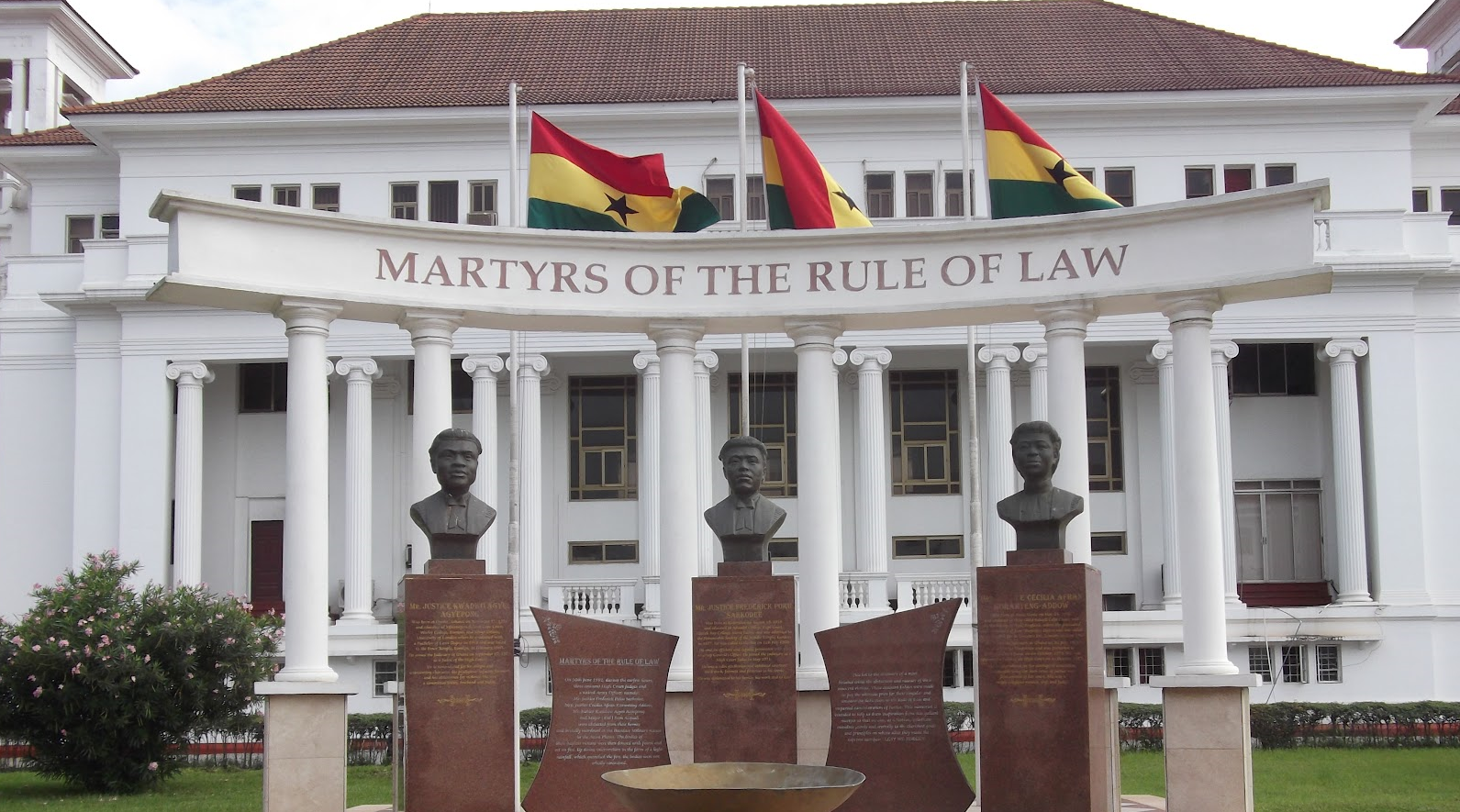
Ghana’s judicial system could face major disruptions as the Judicial Service Staff Association of Ghana (JUSAG) threatens to embark on an indefinite nationwide strike beginning Monday, November 2, 2026, over the government’s failure to approve and implement revised salaries and allowances for its members.
The association has issued a final ultimatum to the government, demanding immediate action on the 2026 salary review or risk a withdrawal of services that could affect court operations across the country.
In a formal notification dated October 23, 2026, addressed to the National Labour Commission (NLC), JUSAG expressed deep frustration over months of delays, despite repeated appeals to authorities.
According to the association, the Judicial Council has already completed its review and forwarded its recommendations to President John Dramani Mahama for approval, in accordance with Article 149 of Ghana’s 1992 Constitution and the Judicial Service regulations.
However, the association claims the recommendations remain unapproved, leaving thousands of judicial workers waiting for adjustments to their salaries and allowances.
JUSAG revealed that it had written several letters seeking intervention, including correspondence in January and September 2026, but received assurances without meaningful progress.
The association considers the situation particularly unfair because other public sector workers began receiving their revised 2026 salaries in January, while Judicial Service employees are still waiting nearly ten months later.
With negotiations already underway for public sector salaries in 2027, JUSAG says the continued delay has become unacceptable.
The association is demanding two immediate actions from the government:
– Approval of the Judicial Council’s recommendations on the 2026 salary review by October 31, 2026.
– Payment of the revised salaries in November, including outstanding arrears covering January through October 2026.
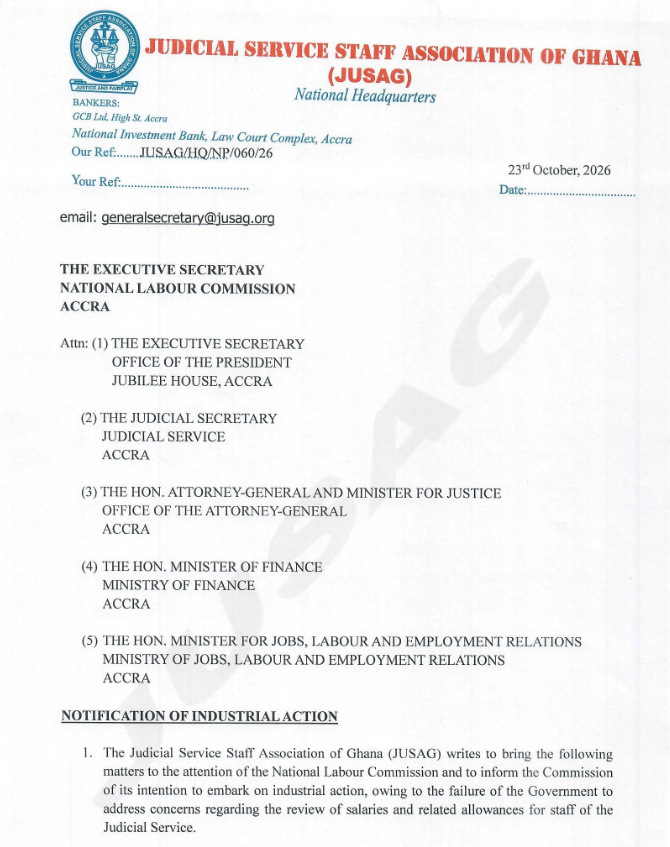
JUSAG General Secretary Abdulai Yakubu, who signed the notification, warned that the association’s patience had reached its limit.
Although JUSAG acknowledged that a nationwide strike could negatively affect justice delivery and public confidence in the judicial system, it maintained that the welfare of its members could no longer be ignored.
The association has therefore declared that failure to satisfy its demands by November 1 will trigger an indefinite strike the following day.
The looming industrial action raises serious concerns about potential delays in court proceedings, administrative services and other judicial activities nationwide.
With the deadline fast approaching, attention now turns to the government and whether urgent negotiations can prevent another major labour confrontation in Ghana’s justice sector.