

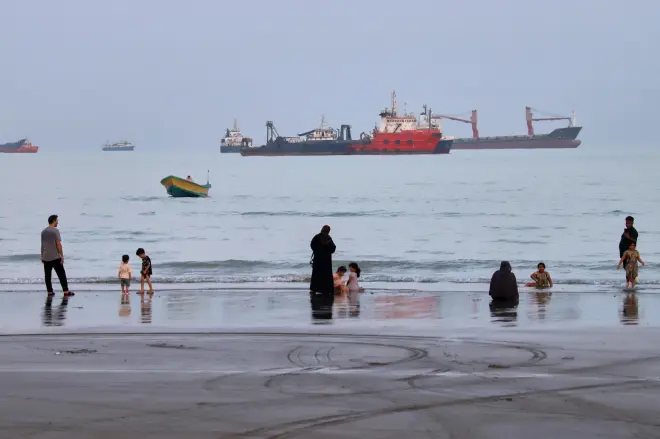
Iran’s hold over the strategically vital Strait of Hormuz is facing growing pressure as the United States challenges Tehran’s authority over one of the world’s most important energy corridors.
The confrontation has intensified in recent days, with both Washington and Tehran claiming control of the waterway. Iranian officials maintain that vessels cannot safely pass through the strait without Tehran’s authorization, while the United States has asserted that its military presence and naval operations have weakened Iran’s ability to dictate maritime movement.
The escalating struggle comes amid severely disrupted commercial shipping. Chinese state-owned shipping companies have reportedly stopped sending tankers through the Strait of Hormuz since late July, instead relying on alternative loading and transfer arrangements outside the Gulf because of heightened security risks.
Tensions climbed even higher on Tuesday, August 18, after another vessel was reportedly struck by a projectile in the Strait of Hormuz. The incident occurred as diplomatic efforts between Iran and the United States suffered another setback, raising fresh fears that the battle for influence over the strategic passage could escalate further.
The Strait of Hormuz has become one of the biggest bargaining chips in the wider U.S.-Iran confrontation. Iran has sought recognition of a powerful role in regulating traffic through the waterway, while Washington insists international shipping must be allowed to move freely.
Global markets are already feeling the pressure. Brent crude moved above $91 per barrel amid renewed concerns about Middle Eastern supply disruptions and the possibility of prolonged instability around the strait.
Despite growing claims that Iran is “losing control,” the situation remains fiercely contested. Tehran continues to insist it controls access to the strait, while the United States is increasingly challenging that assertion militarily and politically.
What is becoming clear, however, is that Iran no longer has an uncontested grip on the Strait of Hormuz. With military pressure rising, shipping companies changing routes and diplomatic negotiations struggling, the battle over this critical global chokepoint is entering an increasingly dangerous phase.