

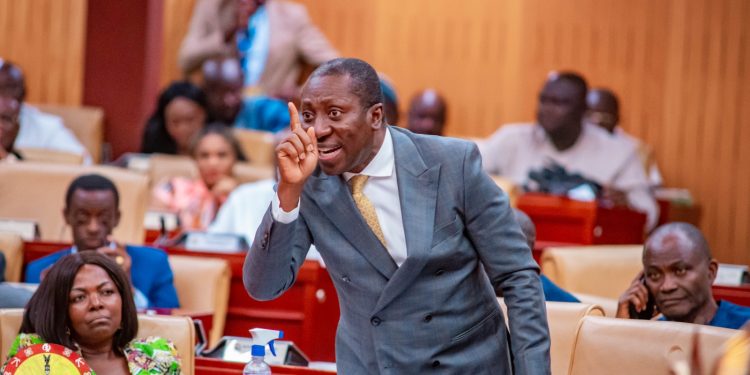
Tension erupted in Ghana’s Parliament on Wednesday after Minority Leader Alexander Afenyo-Markin led members of the Minority Caucus out of the chamber in protest against what they described as persistent bias by First Deputy Speaker Bernard Ahiafor.
The confrontation began during questioning of the Minister for Communication, Digital Technology and Innovations over the government’s proposed re-registration of SIM cards.
Afenyo-Markin attempted to ask a supplementary question about the procurement arrangements and possible financial cost of the exercise. However, the First Deputy Speaker rejected the question, ruling that it had moved beyond the scope of the original question presented to the minister.
The ruling immediately triggered protests from Minority MPs, who accused the presiding officer of preventing them from performing their constitutional responsibility of demanding accountability from government officials.
Following a heated exchange, Afenyo-Markin led his colleagues out of the chamber in a dramatic protest.
Addressing journalists outside Parliament, the Effutu MP accused Ahiafor of repeatedly using parliamentary rules to frustrate Minority MPs, particularly backbenchers, whenever they attempted to question ministers.
According to Afenyo-Markin, supplementary questions are permitted when they arise from answers provided by a minister and are intended to obtain further clarification. He argued that his question about the cost and procurement process behind the proposed SIM card re-registration was directly connected to the minister’s response.
The Minority Leader maintained that Ghanaians deserved to know how much the exercise would cost the state, especially after assurances that subscribers would not be required to pay for the registration.
He further claimed that the walkout was not based on a single disagreement but followed months of growing frustration with the First Deputy Speaker’s handling of Minority interventions.
Afenyo-Markin insisted that parliamentary rules should promote accountability and constructive debate rather than be used to silence elected representatives or weaken legislative oversight.
Despite the dramatic protest, the Minority Leader confirmed that his caucus would return to the chamber to participate in other parliamentary business. He explained that the walkout was specifically intended to register their displeasure with the First Deputy Speaker’s conduct during the questioning session.
The incident has once again exposed the deepening political tension between the Majority and Minority caucuses, with disagreements over parliamentary procedure increasingly becoming major points of confrontation.
As the controversy develops, attention will now turn to whether parliamentary leadership will intervene to address the Minority’s accusations and prevent further disruptions in the chamber.
