
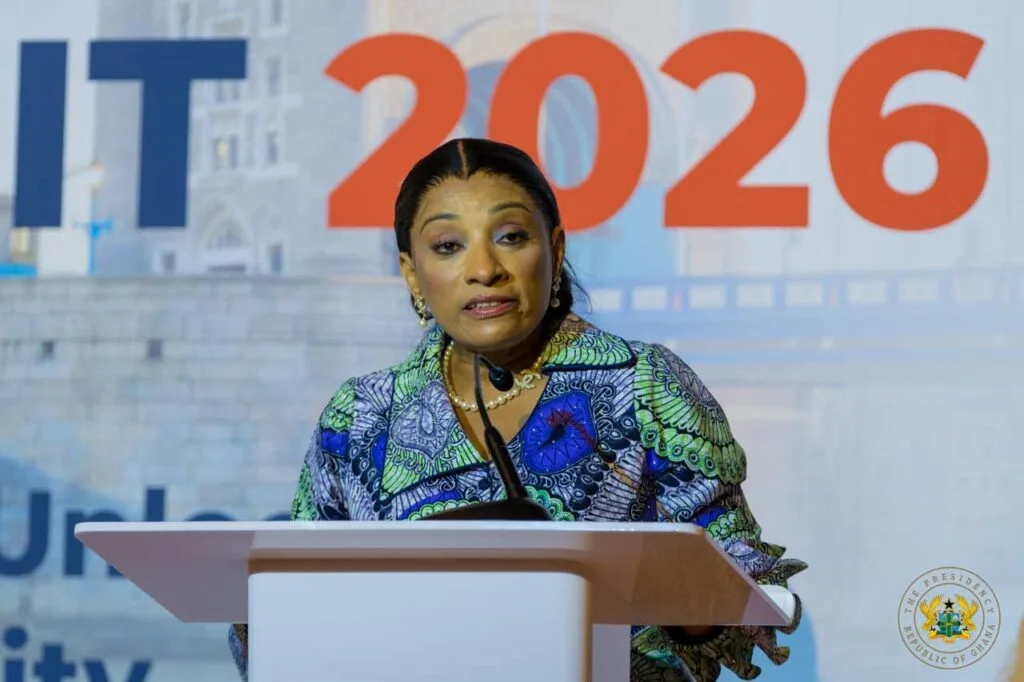
Ghana’s High Commissioner to the United Kingdom and Ireland, Sabah Zita Benson, has raised serious concerns over what she describes as reckless management of Ghana’s scholarship programme, pointing to spending decisions she says contributed to a massive debt burden facing Ghanaian students studying in the UK.
Benson’s revelations have intensified questions over how public funds were administered under the scholarship scheme between 2020 and 2025. She has publicly described the situation as a “mess” and called for accountability over some of the decisions taken during the period.
According to the High Commissioner, Ghanaian scholarship beneficiaries in the UK have been affected by outstanding obligations estimated at tens of millions of pounds, resulting in delayed stipends, unpaid tuition and financial difficulties for some students.
But it is the examples highlighted by Benson that have triggered even greater controversy.
Ghana’s High Commissioner to the United Kingdom and Ireland, Sabah Zita Benson, has raised serious concerns over what she describes as reckless management of Ghana’s scholarship programme, pointing to spending decisions she says contributed to a massive debt burden facing Ghanaian students studying in the UK.
Benson’s revelations have intensified questions over how public funds were administered under the scholarship scheme between 2020 and 2025. She has publicly described the situation as a “mess” and called for accountability over some of the decisions taken during the period.
According to the High Commissioner, Ghanaian scholarship beneficiaries in the UK have been affected by outstanding obligations estimated at tens of millions of pounds, resulting in delayed stipends, unpaid tuition and financial difficulties for some students.
But it is the examples highlighted by Benson that have triggered even greater controversy.
She alleged that in one case, a scholarship arrangement included financial support for the beneficiary’s spouse and three children, with each dependant reportedly receiving £8,160, separate from the principal beneficiary’s scholarship package. She further claimed that approximately GH¢90,000 was spent on airfare for the family.
Benson also questioned a reported scholarship awarded to a 16-year-old to attend a private secondary school in the UK, claiming that more than £56,000 was spent despite the programme allegedly falling outside the Scholarship Secretariat’s normal mandate.
Another case cited by the High Commissioner involved about GH¢90,420 allegedly spent on visa applications, tuberculosis-related costs and air tickets for two students and a spouse.
The explosive claims have fuelled public debate over whether the scholarship system suffered merely from poor judgment and weak oversight or whether deeper irregularities require investigation. Benson herself has repeatedly characterized the spending as reckless and expressed hope that those responsible will eventually be held accountable.
Her comments came as Ghanaian students in the UK protested delays in scholarship payments. Benson maintained that the current government is working to clear inherited arrears, pointing to payments already made and additional installments being processed.
With millions of pounds reportedly involved, the revelations are likely to keep pressure on authorities to establish exactly how scholarship funds were allocated — and whether any wrongdoing went beyond financial mismanagement.
She alleged that in one case, a scholarship arrangement included financial support for the beneficiary’s spouse and three children, with each dependant reportedly receiving £8,160, separate from the principal beneficiary’s scholarship package. She further claimed that approximately GH¢90,000 was spent on airfare for the family.
Benson also questioned a reported scholarship awarded to a 16-year-old to attend a private secondary school in the UK, claiming that more than £56,000 was spent despite the programme allegedly falling outside the Scholarship Secretariat’s normal mandate.
Another case cited by the High Commissioner involved about GH¢90,420 allegedly spent on visa applications, tuberculosis-related costs and air tickets for two students and a spouse.
The explosive claims have fuelled public debate over whether the scholarship system suffered merely from poor judgment and weak oversight or whether deeper irregularities require investigation. Benson herself has repeatedly characterized the spending as reckless and expressed hope that those responsible will eventually be held accountable.
Her comments came as Ghanaian students in the UK protested delays in scholarship payments. Benson maintained that the current government is working to clear inherited arrears, pointing to payments already made and additional installments being processed.
With millions of pounds reportedly involved, the revelations are likely to keep pressure on authorities to establish exactly how scholarship funds were allocated and whether any wrongdoing went beyond financial mismanagement.