

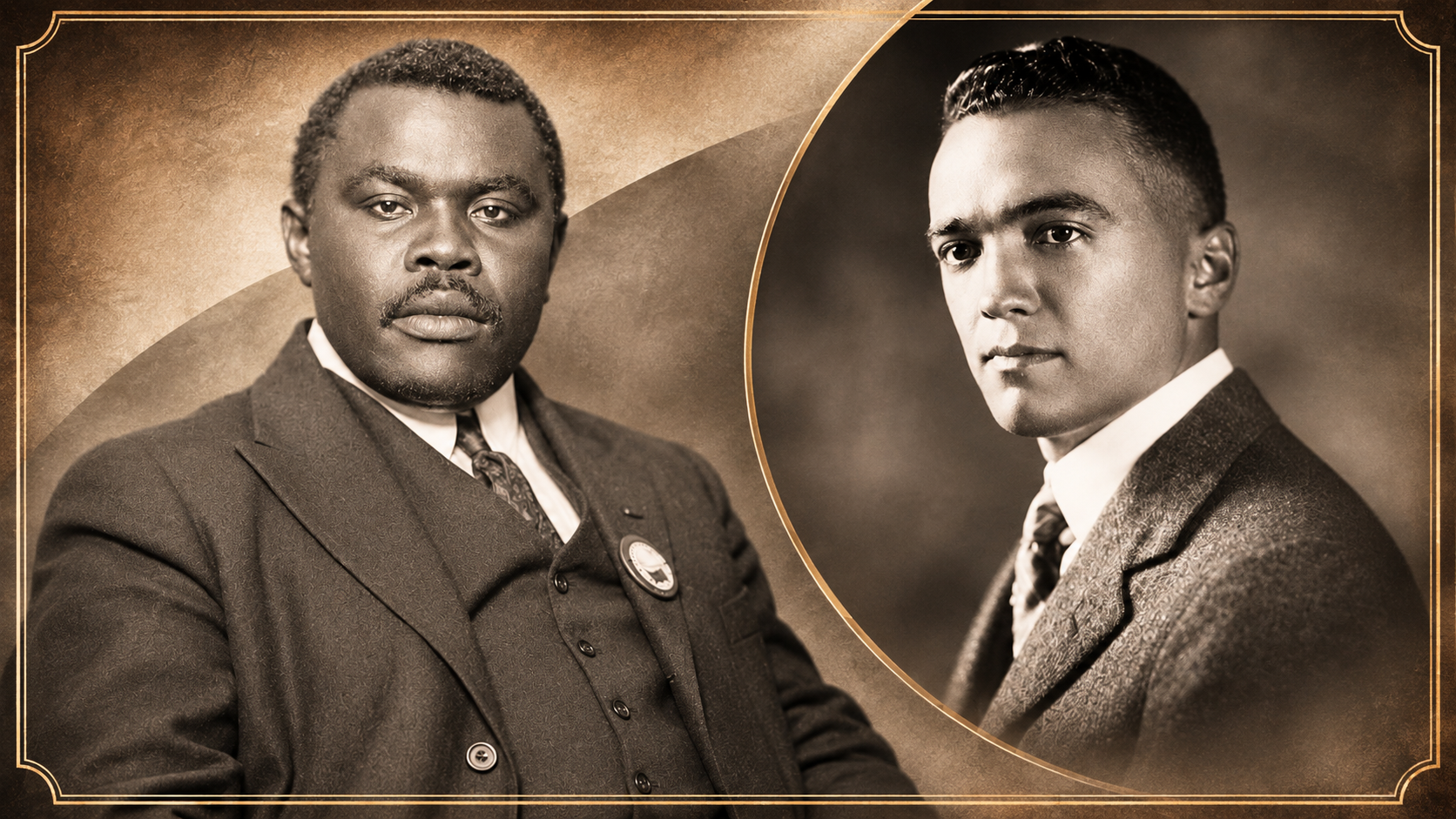
Marcus Mosiah Garvey remains one of the most influential figures in Black liberation history. His vision of African unity, economic independence and Black empowerment inspired millions worldwide. However, behind his remarkable rise was a determined federal campaign to investigate and ultimately undermine his movement.
One of the most intriguing chapters of that campaign involved the recruitment of a Black federal agent to infiltrate Garvey’s organisation.
His name was James Wormley Jones, a former police officer and World War I veteran who would become widely recognised as the first Black special agent in the history of the Federal Bureau of Investigation (FBI).
J. Edgar Hoover’s campaign against Garvey
In 1919, J. Edgar Hoover, who would later become the powerful director of the FBI, became increasingly concerned about Garvey’s growing influence among African Americans.
Through the Universal Negro Improvement Association (UNIA), Garvey encouraged Black people to establish their own businesses, embrace their African heritage and pursue economic and political independence.
His message resonated deeply with Black communities experiencing racial discrimination, segregation and oppression.
Hoover was determined to find sufficient legal grounds to remove Garvey from the United States. However, infiltrating a predominantly Black organisation presented a challenge for the largely white federal investigative agency.
The recruitment of Agent 800
On December 2, 1919, James Wormley Jones was appointed as a special agent of the Bureau of Investigation, the predecessor of the modern FBI.
Operating under the identification number Agent 800, Jones was assigned to undercover operations, including infiltrating Garvey’s organisation and gathering information about its activities.
According to historical accounts documented by PBS and the FBI, his recruitment was closely connected to Hoover’s determination to build a legal case against Garvey.
Ironically, a historic breakthrough in Black representation within federal law enforcement became intertwined with government efforts to dismantle one of the world’s most influential Black empowerment movements.
The imprisonment and deportation of Marcus Garvey
Federal investigators eventually focused their attention on the Black Star Line, a shipping enterprise established by Garvey to promote international trade and economic opportunities for people of African descent.
In 1923, Garvey was convicted of mail fraud and sentenced to five years in prison.
His sentence was commuted by President Calvin Coolidge in 1927, and he was subsequently deported to Jamaica.
Many historians and Garvey supporters have questioned the fairness of his prosecution, arguing that political and racial considerations influenced the government’s pursuit of him.
On January 19, 2025, President Joe Biden granted Garvey a posthumous presidential pardon, more than a century after his conviction.
A disturbing chapter in Black history
Although historical evidence does not establish that Jones was recruited to assassinate Garvey, his involvement in the federal campaign to infiltrate and undermine the Pan-African leader is well documented.
The episode remains a striking contradiction in American history: the recruitment of a pioneering Black federal agent coincided with efforts to bring down a man who dedicated his life to Black liberation.
Despite his imprisonment, deportation and years of government surveillance, Garvey’s philosophy survived, influencing generations of African independence leaders and civil rights activists.
The authorities succeeded in removing Marcus Garvey from America, but they could not extinguish his vision of Black empowerment and African unity.
