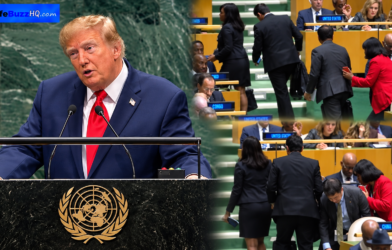

United States President Donald Trump has issued a stern warning to Iran after Tehran-backed Houthi fighters attacked two Saudi oil tankers in the Red Sea, raising fears of a wider disruption to global energy supplies.
The attacks targeted the Saudi vessels Encelia and Layla near the Bab el-Mandeb Strait, a strategic shipping passage connecting the Red Sea to the Gulf of Aden. Fires were reported aboard the tankers, although there were no immediate reports of casualties.
Responding to the escalating threat on Thursday, July 23, 2026, Trump warned that the United States would hold Iran responsible for any further attacks carried out by the Houthis. He threatened what he described as major military punishment against both Tehran and the Yemeni armed group if the strikes continued.
The Houthis have announced a maritime blockade targeting Saudi-linked shipping, claiming the move is retaliation for Saudi actions against Yemen. The group has demonstrated its ability to threaten commercial vessels with missiles, drones, mines and armed boats operating near the important waterway.
The Bab el-Mandeb Strait is considered one of the world’s most important trade chokepoints, with approximately 12% of global commerce passing through the route. Any sustained disruption could force vessels to travel around Africa, increasing transportation costs and causing major delays.
The latest attacks are especially concerning because Gulf countries have been using Red Sea routes to reduce their dependence on the Strait of Hormuz, where shipping has already been severely affected by the ongoing conflict involving Iran and the United States.
Saudi Arabia has transported millions of barrels of oil through its East-West Pipeline to the Red Sea port of Yanbu, allowing exports to avoid the troubled Hormuz passage. The Houthi threat now places that alternative route under serious pressure.
Global markets reacted quickly to the escalating crisis. Brent crude rose by more than 6%, briefly climbing above $100 per barrel as traders considered the possibility of disruptions across two major oil-shipping routes.
Trump’s ultimatum marks another dangerous escalation in the Middle East conflict. Although Iran supports the Houthis, Tehran has not publicly accepted responsibility for the tanker attacks.
With Washington threatening retaliation and the Houthis showing no immediate sign of abandoning their blockade, pressure is mounting on diplomatic efforts to prevent the conflict from spreading further across the region.
The next attack could now determine whether Trump’s warning remains an ultimatum or becomes the beginning of another major military confrontation.