

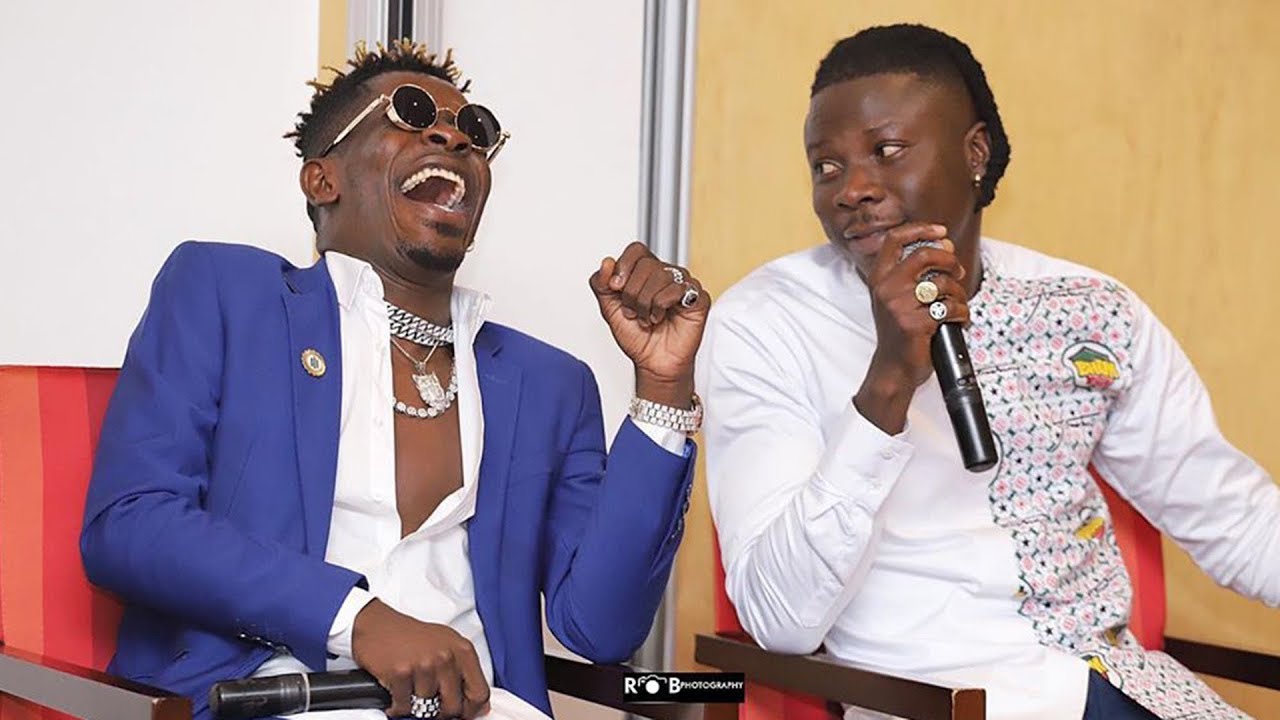
Ghana’s fiercest dancehall rivalry has taken another dramatic turn after Shatta Wale launched a fresh verbal attack on Stonebwoy, questioning his rival’s credibility and ability to stand by his public declarations.
Speaking in a teaser from an appearance on The Honest Bunch podcast, the Shatta Movement leader alleged that Stonebwoy frequently makes statements but fails to back them with corresponding action. Shatta Wale contrasted that alleged behaviour with his own outspoken personality, presenting himself as someone who remains committed to whatever he says.
According to Shatta Wale, his words are never empty. He claimed that when he announces his intentions, he is prepared to follow through rather than retreat when confronted. The controversial musician used the moment to portray himself as fearless, authentic and unwilling to hide behind carefully managed public statements.
The “On God” hitmaker also revisited his past relationship with Stonebwoy, claiming that the BHIM Nation president frequently visited him during the early stages of his career and once addressed him as “Daddy.” Shatta Wale suggested that their relationship changed after Stonebwoy began receiving greater media attention and was regularly compared with him.
Although Shatta Wale insisted that he holds no personal grudge against Stonebwoy, he alleged that his longtime rival becomes uncomfortable whenever they meet privately. He attributed that supposed discomfort to his confidence, commanding presence and willingness to defend his statements.
Stonebwoy has since rejected Shatta Wale’s version of their relationship. Responding on X, he referred to their most recent encounter and accused the Shatta Movement leader of lying about what had happened between them. His reaction quickly intensified discussions among supporters of both musicians.
The renewed exchange has once again destroyed hopes that previous public gestures of reconciliation had permanently ended their feud.
With Shatta Wale now questioning Stonebwoy’s integrity and Stonebwoy accusing him of dishonesty, one of Ghanaian music’s longest-running rivalries appears nowhere near its conclusion.