
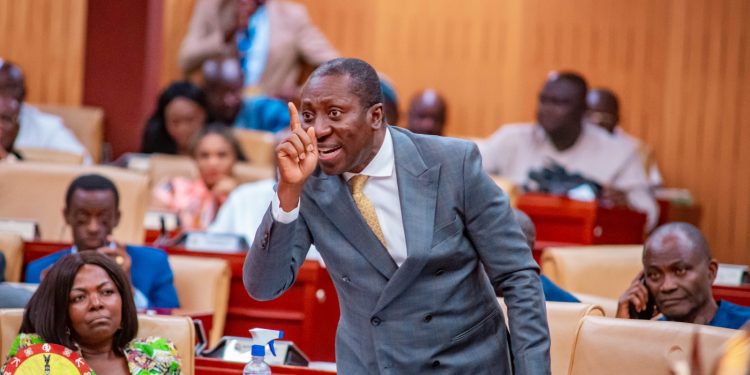
Ghana’s political debate over the operations of the Ghana Gold Board (GoldBod) has intensified after Minority Leader Alexander Afenyo-Markin issued a dramatic warning that the institution could become the centre of a major scandal.
The Effutu MP cautioned GoldBod’s leadership to be careful, suggesting that the Minority possesses information about the institution’s activities that may not yet be in the public domain. He described GoldBod as a potentially “very big scandal” awaiting the country.
Afenyo-Markin’s warning comes amid growing controversy over the financial impact of Ghana’s Domestic Gold Purchase Programme.
An International Monetary Fund assessment indicates that the significant expansion of the programme in 2025 resulted in losses exceeding US$1.7 billion, representing about 1.5% of Ghana’s GDP. The figure has triggered fierce political debate over how the programme has been managed and who should ultimately bear responsibility.
However, there is disagreement over describing the US$1.7 billion figure as a direct GoldBod loss.
University of Ghana economist Prof. Ebo Turkson has argued that the amount represents a cost recorded by the Bank of Ghana under the gold purchase programme rather than an operating loss made directly by GoldBod. He maintains that GoldBod’s own financial position should be assessed separately.
GoldBod CEO Sammy Gyamfi has also defended the institution’s performance, arguing that its activities have contributed significantly to foreign exchange availability, Ghana’s international reserves and the stability of the cedi. According to GoldBod, its operations alongside the Bank of Ghana generated more than US$10.8 billion in foreign exchange earnings from artisanal and small-scale gold purchases and exports.
Despite those explanations, Afenyo-Markin insists there are serious questions that require answers.
His warning is expected to deepen calls for greater parliamentary scrutiny and transparency surrounding GoldBod’s transactions and the wider gold purchasing programme.
With both sides presenting sharply different interpretations of GoldBod’s performance, the controversy appears far from over and the Minority Leader’s latest warning has placed the institution firmly back under the political microscope.