

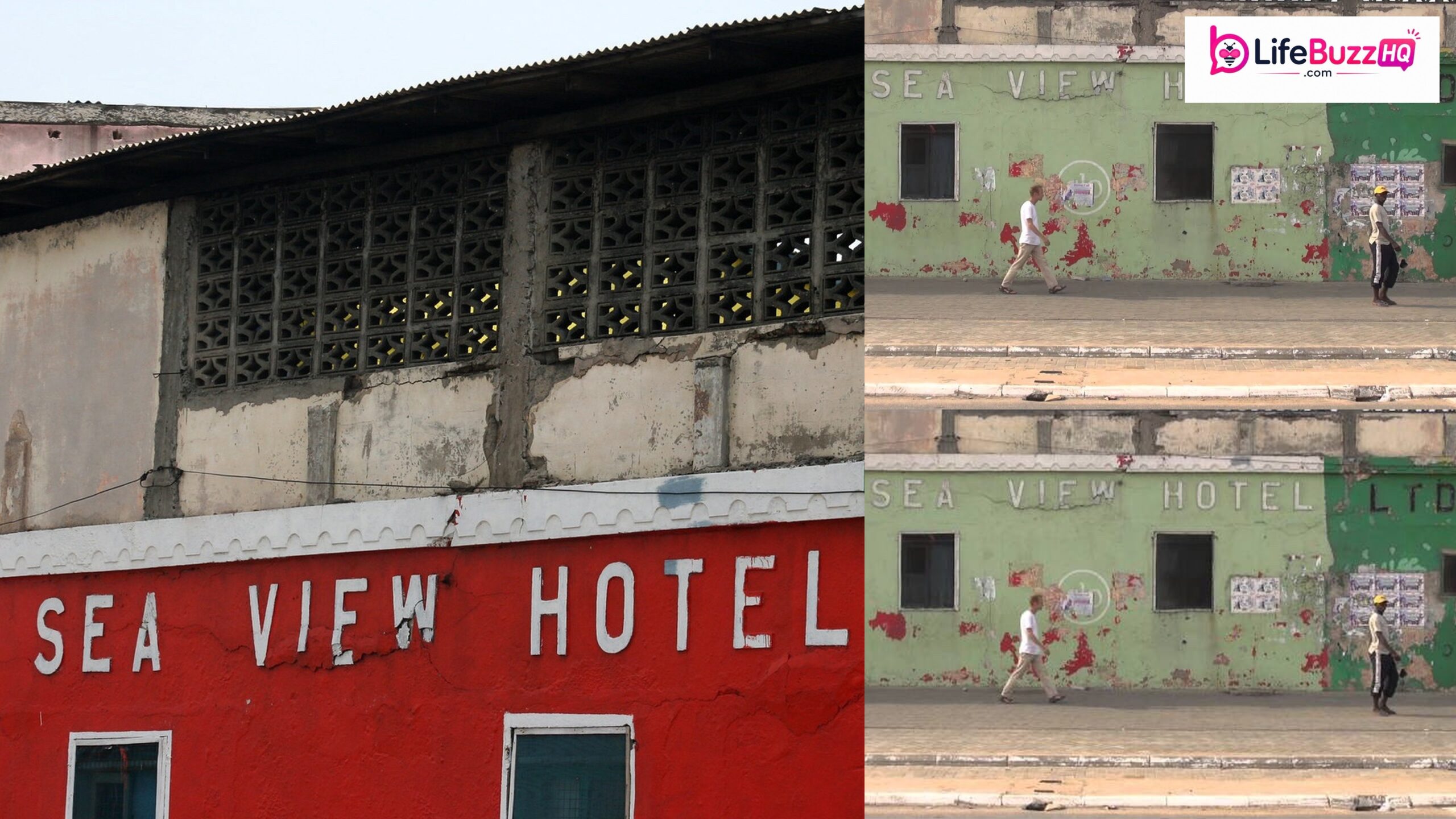
In many countries across the world, historic buildings are carefully preserved, renovated and transformed into tourist attractions. In Ghana, however, some of the country’s most significant historical monuments have been allowed to deteriorate, eventually disappearing without much resistance.
One heartbreaking example is the Sea View Hotel, widely recognised as Ghana’s first hotel, which once stood proudly in the historic community of Jamestown, Accra.
A historic landmark that witnessed generations
Located opposite the iconic Jamestown Lighthouse, the Sea View Hotel was a remarkable architectural landmark overlooking the Atlantic Ocean.
Architectural historian Iain Jackson dates the building to 1873, although historical accounts differ regarding its exact establishment date.
During the Gold Coast era, the hotel accommodated prominent international visitors, merchants, explorers and colonial officials. Among its notable guests were British explorer Mary Kingsley and journalist Henry Morton Stanley.
The establishment was more than a place of accommodation. It represented the early development of Ghana’s hospitality industry and witnessed significant transformations in the country’s political, economic and social history.
From national pride to neglect and demolition
Despite its historical significance, the Sea View Hotel gradually lost its prominence as modern hotels emerged across Accra.
Years of deterioration and inadequate preservation eventually robbed the building of its former glory.
On November 2, 2015, the historic structure was demolished. The property reportedly changed hands to make way for a church development, bringing an unfortunate end to one of Ghana’s earliest hospitality establishments.
What could have become a magnificent heritage museum, restored boutique hotel or international tourist attraction was reduced to rubble.
A missed opportunity for Ghana’s tourism industry
Imagine the economic and cultural benefits Ghana could have enjoyed had the Sea View Hotel been restored to its original architectural splendour.
Tourists, historians, researchers and members of the African diaspora could have visited the establishment to learn about Ghana’s early hospitality industry and colonial history.
Its preservation could also have created employment opportunities, generated tourism revenue and contributed to the economic revitalisation of Jamestown.
Unfortunately, its demolition reflects a broader problem concerning the preservation of historical buildings in Ghana.
Development should not necessarily come at the expense of cultural heritage. Modern infrastructure and historical architecture can coexist when responsible urban planning and effective conservation policies are implemented.
Ghana must wake up before more history disappears
The Ministry of Tourism, Culture and Creative Arts, Ghana Museums and Monuments Board, traditional authorities and metropolitan assemblies must strengthen their efforts to identify, protect and restore endangered historical buildings.
Private property owners should also be encouraged through financial incentives and public-private partnerships to preserve buildings of national historical significance.
The destruction of the Sea View Hotel should serve as a painful reminder of what happens when a nation fails to appreciate the value of its historical assets.
Ghana cannot continuously promote its rich cultural heritage to the international community while allowing the physical evidence of that heritage to disappear.
The Sea View Hotel may be gone forever, but its unfortunate fate should inspire a national conversation about heritage conservation.
A nation that celebrates its history in words but destroys it in practice risks leaving future generations with nothing but photographs and stories of what once existed.