

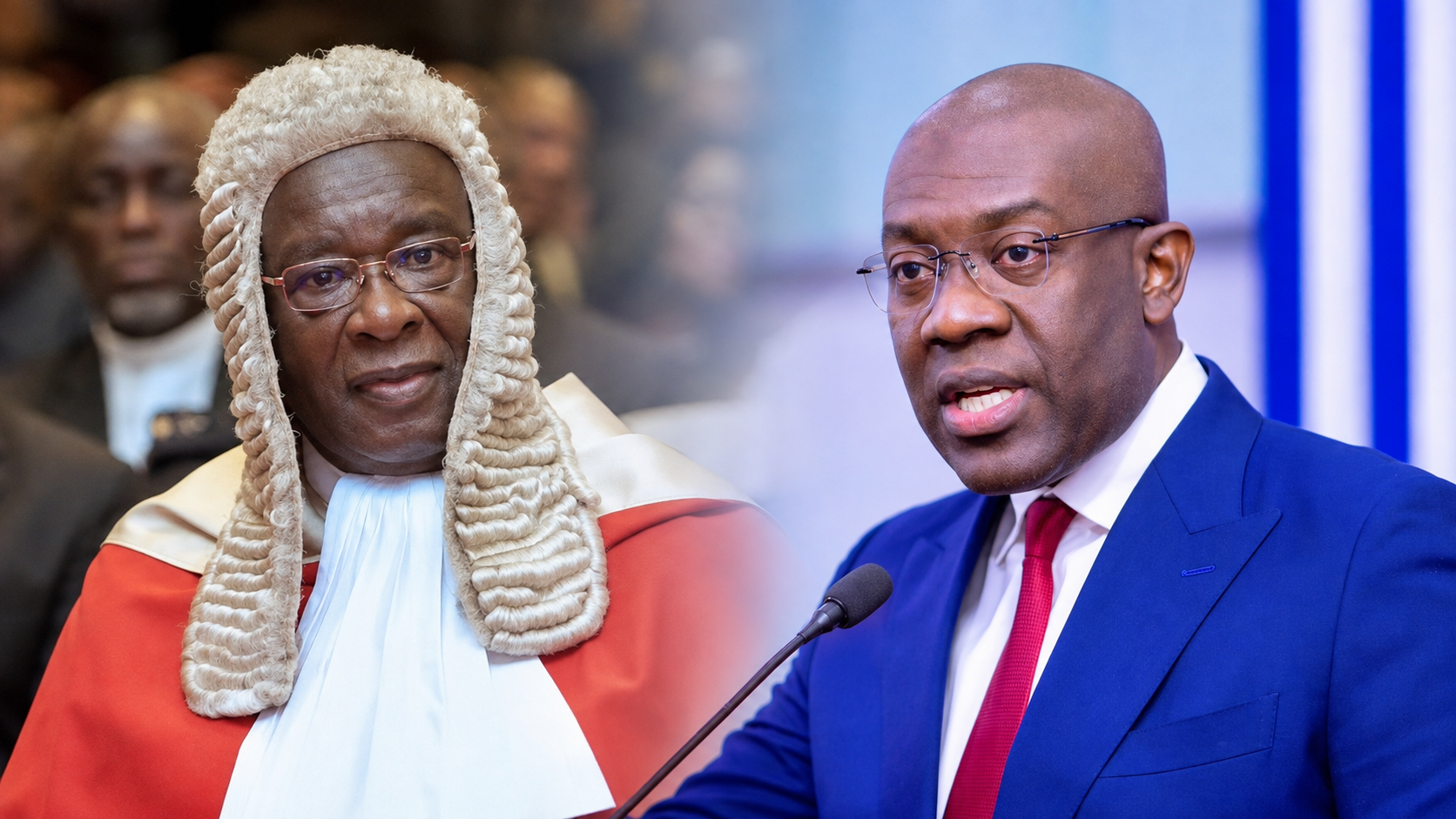
Ghana’s political and legal space has been thrown into fresh controversy after Ofoase-Ayirebi MP Kojo Oppong Nkrumah filed a lawsuit against Chief Justice Paul Baffoe-Bonnie and the Attorney-General, challenging directives that allow selected criminal cases to be heard during the judiciary’s legal vacation.
Oppong Nkrumah, a lawyer and former Information Minister, has invoked the original jurisdiction of the Supreme Court, arguing that the arrangement could amount to “selective justice” and violate constitutional protections requiring fairness and equal treatment.
At the center of the dispute are warrants issued for selected High Court judges to hear certain criminal cases during the legal vacation running from August 1 to September 30, 2026. Oppong Nkrumah is questioning why some criminal proceedings are being permitted to continue while other cases remain outside the special arrangement.
The lawmaker is asking the Supreme Court to declare the directives unconstitutional, null and void. His case cites several provisions of Ghana’s 1992 Constitution, including Articles 17, 23 and 296, which deal with equality, administrative justice and the proper exercise of discretionary power.
Oppong Nkrumah has made clear that his lawsuit is not an attempt to deny the Chief Justice’s constitutional authority to administer the judiciary. Instead, he argues that even broad administrative powers must be exercised within constitutional limits and in a manner that is fair, transparent and non-arbitrary.
The suit also raises concerns about the impact of court sittings during the legal vacation on members of the Bar and Judicial Service, with Oppong Nkrumah asking the court to examine whether aspects of the arrangement are inconsistent with constitutional provisions concerning workers’ rights and health.
Justice Paul Baffoe-Bonnie is Ghana’s current Chief Justice, having received parliamentary approval in November 2025 and subsequently been sworn into office.
The legal challenge now places one of Ghana’s prominent opposition lawmakers against the leadership of the judiciary in a case that could have wider implications for how courts operate during legal vacations.
With questions of equal justice, judicial administration and constitutional authority now before the Supreme Court, the outcome could help define the boundaries of the Chief Justice’s administrative powers and determine whether selected criminal trials can continue during future legal vacations.
