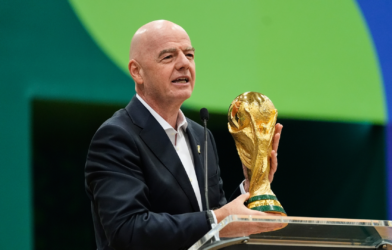


A major power struggle has erupted at the heart of global football after UEFA and its 55 member associations unanimously announced a boycott of FIFA competitions over a controversial private investment proposal.
European football’s governing body declared that its national teams would not participate in any FIFA tournament while the plan remained active. The dramatic decision could affect future men’s and women’s World Cups, as well as FIFA’s youth competitions.
The controversy centres on FIFA Forward Enterprise, a proposed commercial subsidiary that would combine FIFA’s broadcasting, sponsorship, licensing, ticketing and hospitality rights with the operational delivery of its tournaments.
Under the proposal, FIFA would seek to raise as much as $4.2 billion by selling minority, non-controlling interests in the new company to long-term private investors. The subsidiary has reportedly been valued at about $20 billion.
FIFA insists it would retain control over the company and maintain exclusive authority over sporting decisions, competition formats, governance and the international match calendar. The organisation says the investment would significantly increase financial support for its 211 member associations and fund stadiums, training centres and other football-development projects.
UEFA, however, has strongly rejected that explanation.
The European body accused FIFA of developing the proposal without meaningful consultation and warned that introducing outside investors could permanently change how major competitions are managed. UEFA fears commercial returns and shareholder expectations could begin influencing decisions that should be made in the best interests of players, national teams and supporters.
UEFA’s 55 associations have demanded that FIFA completely abandon the proposal and provide binding guarantees that its competitions will never be opened to private ownership.
The united European resistance places enormous pressure on FIFA President Gianni Infantino. A World Cup without leading nations such as England, France, Germany, Italy, Portugal and reigning world champions Spain would deliver a massive sporting and commercial blow.
The proposal must still receive support from a majority of FIFA’s member associations and obtain the necessary approval from the FIFA Council before it can proceed.
What began as an ambitious plan to generate billions for football development has now triggered one of the most serious confrontations between FIFA and UEFA in modern football history.